


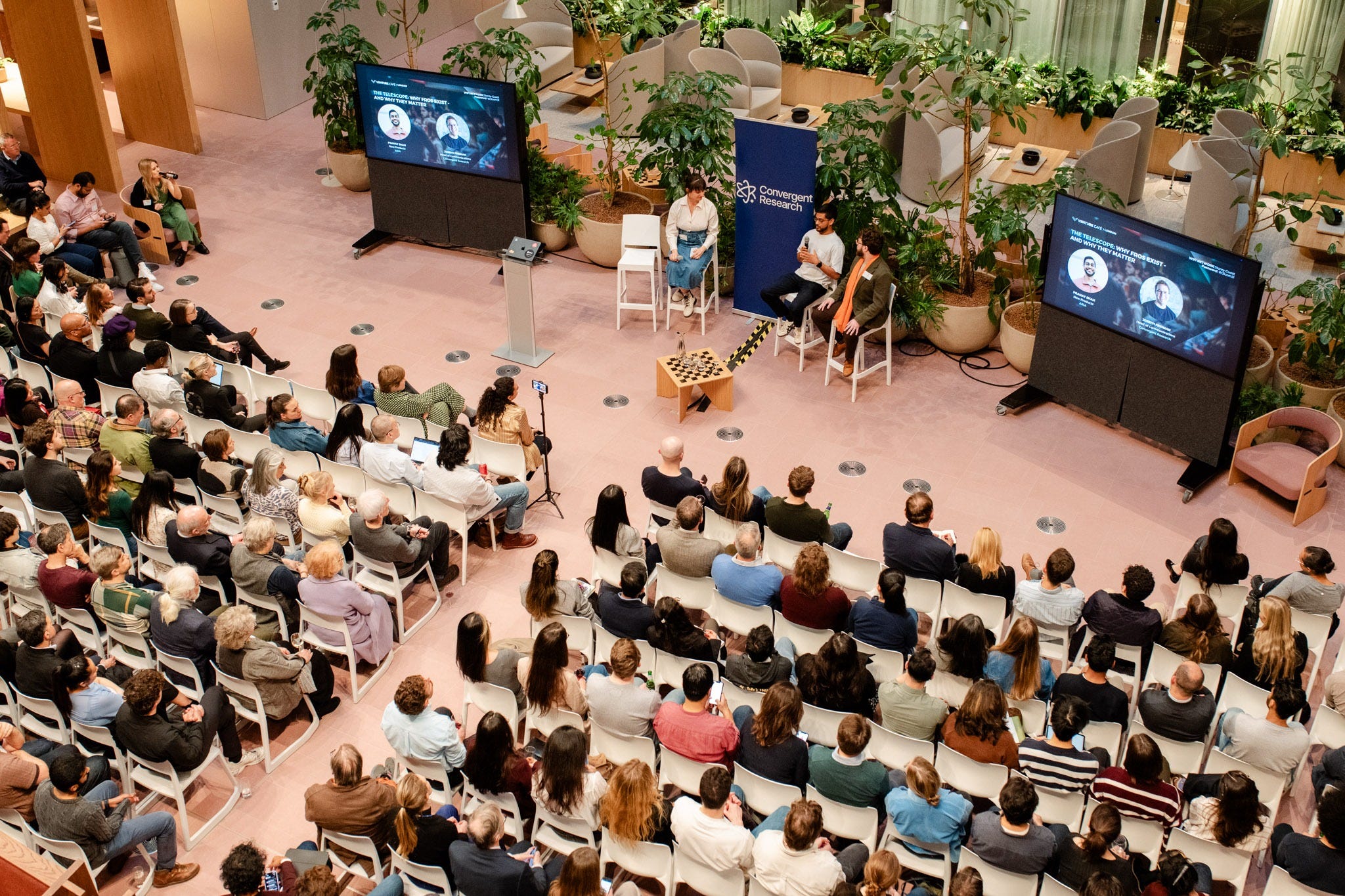
We’re very excited to announce the launch of two new Focused Research Organizations in the UK powered by ARIA: Meridial and Echo Labs!
These two organizations represent a new way to build scientific institutions around specific technical bottlenecks that are too engineering-heavy, operationally complex, or long-horizon for conventional labs or startups to address effectively. In Convergent Research’s role as an ARIA Activation Partner we developed the UK FRO Founder Residency with the aim of identifying and refining FRO-shaped projects aligned with ARIA opportunity spaces, to help build the capability to launch and support new FROs in the UK. The UK is Convergent’s first major expansion outside the US.

“Building the right institution can matter as much as having the right idea. ARIA is working to expand what’s possible for high-risk, high-reward science, and FROs are a powerful way of doing that. Meridial and Echo Labs are tackling the kinds of bottlenecks and opportunities this approach is designed to address, and we’re excited to see what new capabilities they make possible.” - Pippy James, Deputy CEO at ARIA
Each of the two new organizations is tackling a different bottleneck, but both are built around the same core premise: that some forms of scientific progress require purpose-built organizations, not just new grants or new labs. Both align with a distinct ARIA opportunity space, targeting areas where new infrastructure could unlock significant progress. These new organisations are:
Meridial, launching with an initial £14 million award from ARIA and aligned with its Scalable Neural Interfaces opportunity space, is building a microscopy platform designed to map and track synaptic connections in living animals over time. By making it possible to observe how brain connectivity changes across development, disease, learning, and therapeutic intervention, Meridial aims to help bridge an important gap between molecular mechanisms and circuit-level function. Over its funded period, Meridial will work to develop and operate a platform capable of mapping and longitudinally tracking synaptic connections across local and long-range brain circuits over extended time periods.
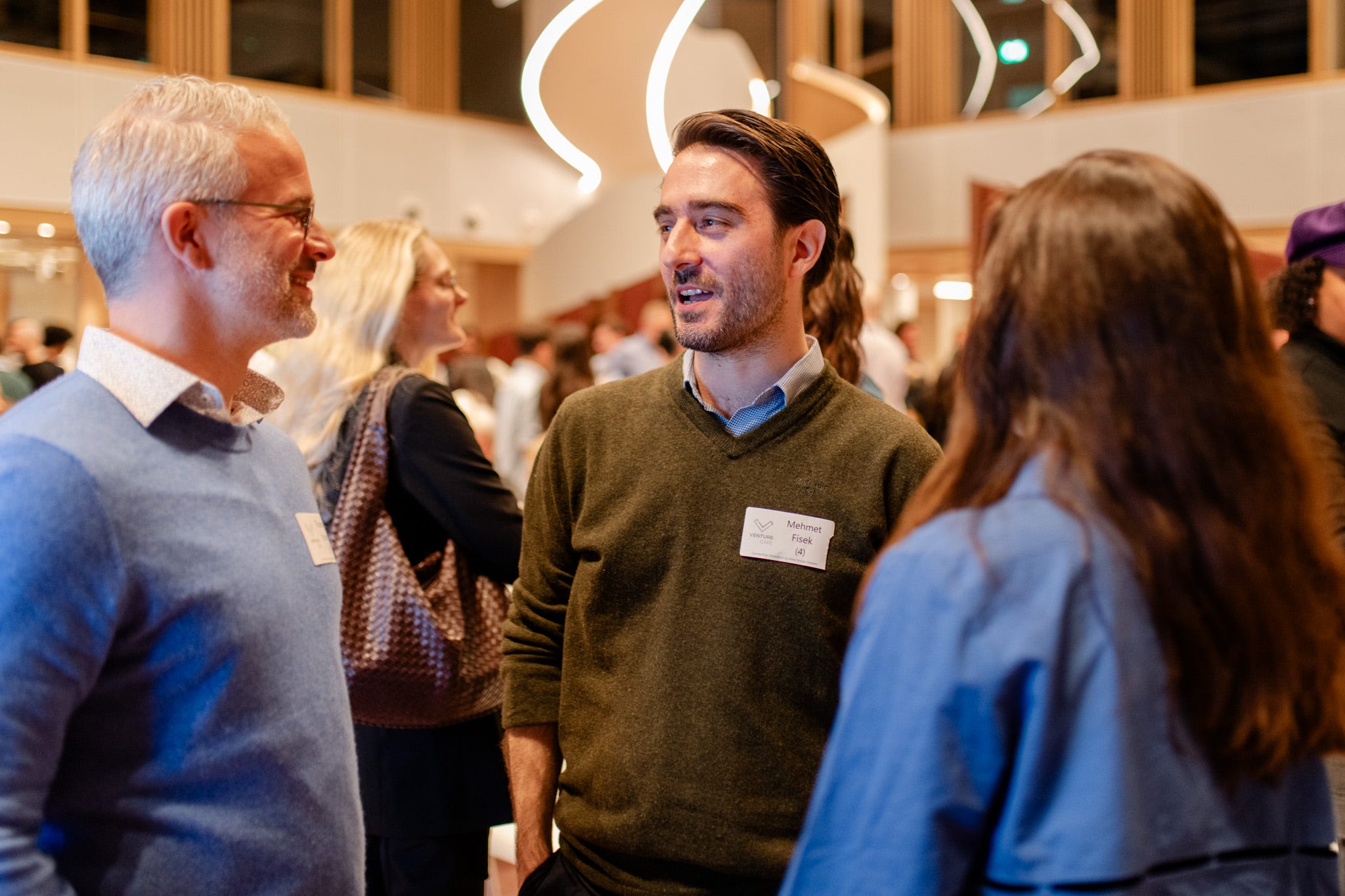
“Many of the most important questions in neuroscience and brain health relate to how living circuits change over time. Today, when we seek to observe such changes with high resolution, we are often limited by scale, or must infer dynamics from static snapshots of extracted tissue. Meridial is being built to overcome these challenges with a platform for mapping and tracking synaptic connections in living animals over extended periods. We think infrastructure like this could help open up new ways of understanding development, disease, learning, and therapeutic intervention.” - Mehmet Fisek, Founder and CEO of Meridial.
“Progress in brain science and brain health has been constrained for too long by the limits of our tools. Meridial is exciting because it is building infrastructure that could let researchers observe how neural circuits change over time, rather than inferring those changes indirectly after the fact. That kind of capability could open up important new routes for understanding disease, development, and recovery.” - Jacques Carolan, Programme Director at ARIA.
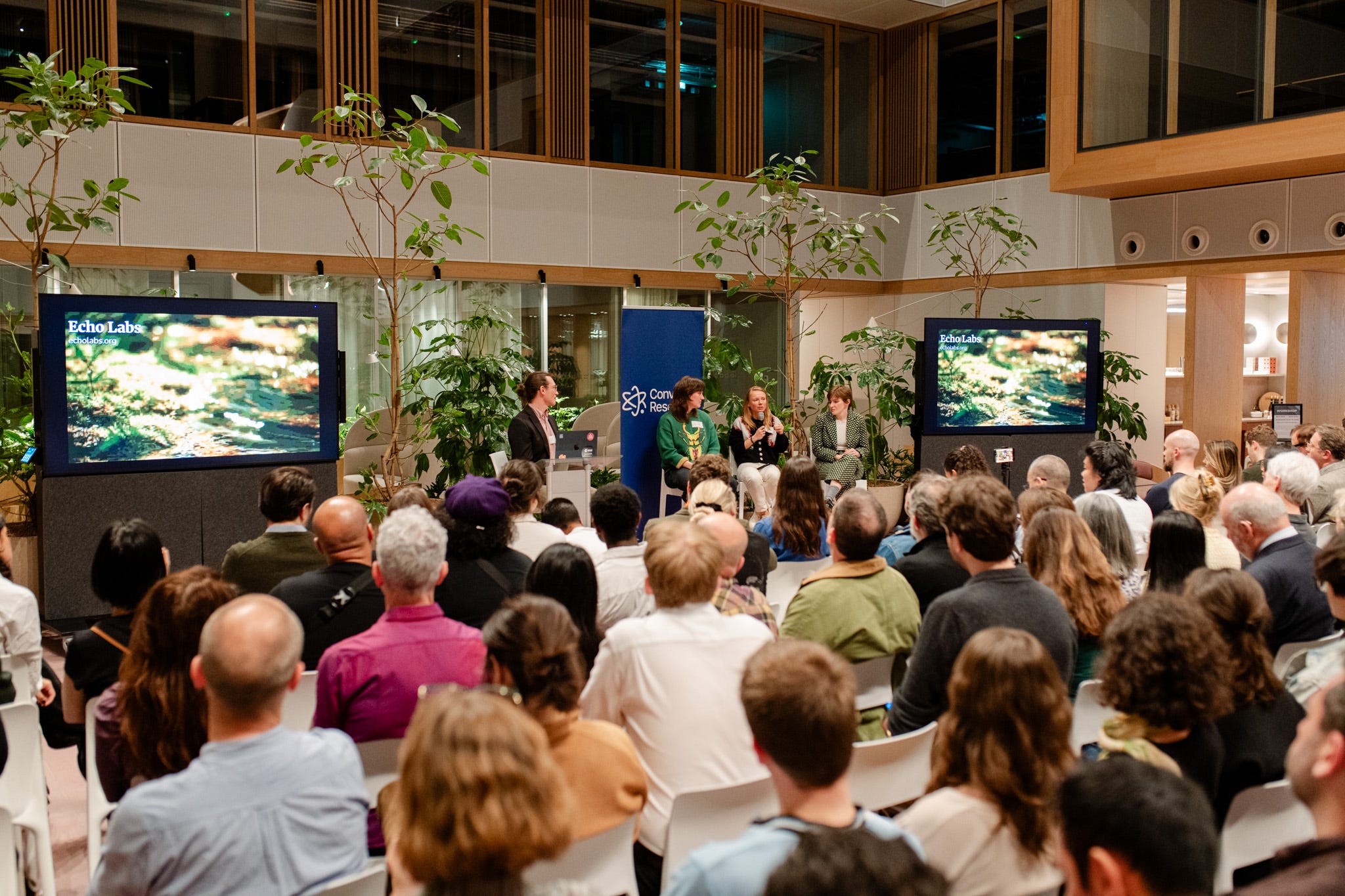
Echo Labs, launching with an initial £7 million award from ARIA and aligned with its Scoping Our Planet opportunity space, is building new infrastructure to represent the natural world and make it legible enough to model, compare, and forecast. If the state of an ecosystem can be measured as a dynamic system, the implications extend beyond observation. Just as weather and human health became understandable through shared measurements and modeling, ecosystem condition could become a measurable, continuously updated layer of intelligence.
“Today, ecology generates fragmented observations but lacks the integrated representation needed to understand ecological complexity and translate it into usable signals. Ecosystems underpin our economies and societies, but we still lack the scientific infrastructure to measure and forecast ecological condition with anything like the precision we bring to other natural or engineered systems. We envision a world in which global ecosystem condition is continuously observed, modeled, and useful for science, governance, finance, and stewardship happens before collapse occurs, rather than after.” - Kaja Wasik, PhD, CEO of Echo Labs.
“Responsible stewardship requires sufficiently good understanding. Yet for most species, ecological interactions, and ecosystems, our ability to measure and forecast remains frustratingly limited. Echo Labs aims to build foundational infrastructure for ecological intelligence, enabling intentional action that complements well-established approaches to supporting nature.” - Yannick Wurm, Programme Director at ARIA.
Meridial and Echo Labs join a growing UK FRO landscape that includes Bind Research, a UK-based not-for-profit focused on making disordered proteins druggable. Together, these efforts suggest a broader institutional shift: one in which new scientific organizations are designed not around disciplines alone, but around bottlenecks, capabilities, and the shared infrastructure required to unlock downstream progress.
“Scientific progress is often slowed not by a lack of ideas, but by a lack of institutions designed to turn important ideas into shared capabilities. Focused Research Organizations are built for exactly that gap. We’re excited to see this model continue to take root in the UK through organizations that are technically ambitious, tightly scoped, and built to create public goods with broad downstream value. We can’t wait to share more from these two teams and our ongoing work with ARIA. - Anastasia Gamick, President and co-founder of Convergent Research
Both Meridial and Echo Labs are expanding their teams in 2026. Keep an eye on their websites (and this blog) to learn more: meridial.org and echolabs.org.